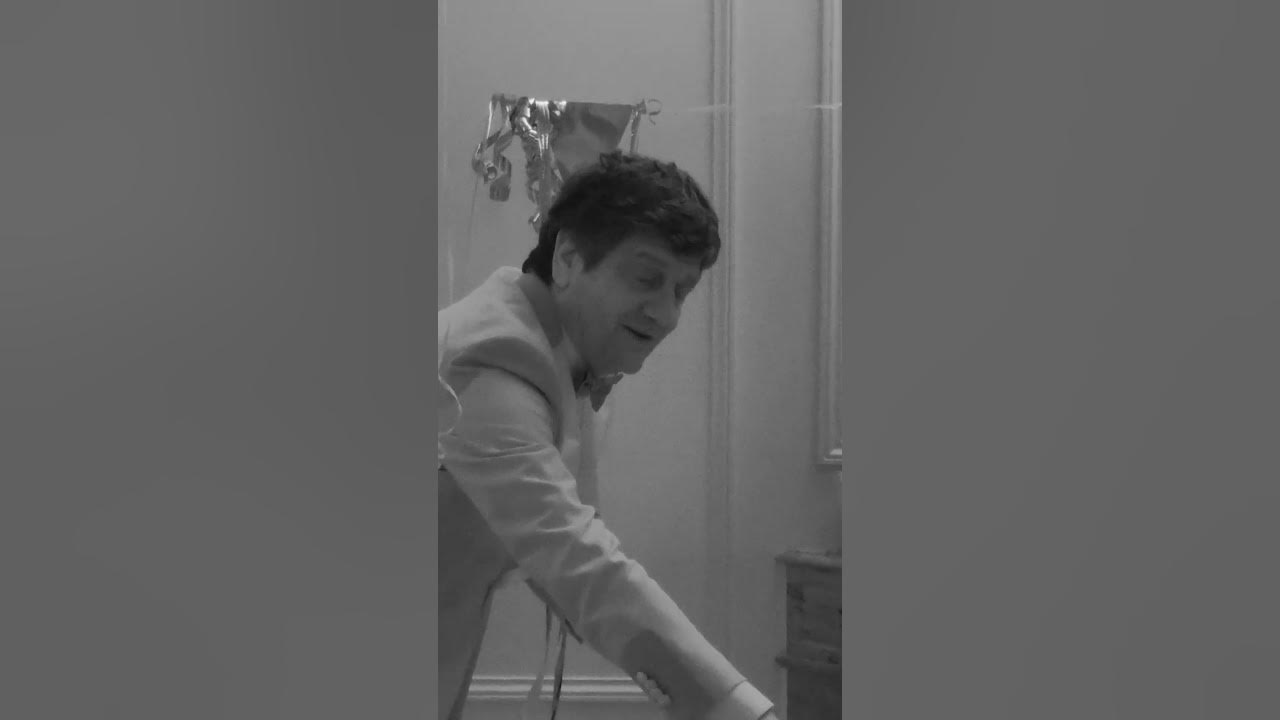
Fabio De Luigi, a name synonymous with intelligent, nuanced Italian comedy, has etched an indelible mark on the entertainment landscape. From his early days of creating unforgettable characters on the iconic "Mai Dire Gol" with the Gialappa's Band to his recent introspective journey in the Prime Video show "Amazing" and revealing podcast appearances on Gianluca Gazzoli's BSMT, De Luigi's career is a masterclass in artistic evolution and strategic self-preservation. This article delves into his pivotal moments, the challenge of escaping his own comedic creations, and the resilience that paved his path to becoming one of Italy's most beloved and respected artists.
The Unforgettable Era of Mai Dire Gol and the Gialappa's Band
For many, the mention of Fabio De Luigi Gialappa's immediately conjures images of the legendary "Mai Dire Gol" program. This show was more than just a comedy sketch series; it was a cultural phenomenon that redefined Italian humor, thanks largely to the brilliant, often irreverent commentary of the Gialappa's Band and the extraordinary talents they nurtured. De Luigi's entry into this celebrated ensemble was serendipitous, as he candidly revealed on the BSMT podcast. He was brought in during a generational shift, but with a specific, almost strategic intent: to prevent him from joining another prominent TV show, that of Daria Bignardi.
This unique recruitment speaks volumes about the Gialappa's Band's foresight and their keen eye for comedic potential. They didn't just hire actors; they cultivated unique voices. De Luigi flourished, giving life to a gallery of indelible characters that quickly became household names. Who could forget the perpetually bewildered Olmo, the exasperated Lucarelli, the endearing yet tragic clown Baraldi, the explosive Bum Bum Picozza, or the infinitely adaptable Ingegnere Cane?
Ingegnere Cane, in particular, stands as a testament to De Luigi's sharp satirical wit and the Gialappa's ability to tap into the Italian zeitgeist. His parody of the Messina Strait Bridge debates, which eerily resonates even today, highlights a profound truth: some societal issues remain stubbornly unresolved, much like a pair of "jeans that fit everything." The enduring relevance of these characters, years after their prime-time debut, underscores their brilliance and the collaborative genius that defined the Fabio De Luigi Gialappa's era.
The synergy between De Luigi's theatrical instincts and the Gialappa's irreverent narration created a unique comedic landscape. Their format allowed characters to develop organically, evolving beyond simple sketches into cultural touchstones that provided both laughter and astute social commentary. This period was crucial, not only for De Luigi's rise but also for shaping a generation's understanding of self-aware, intelligent humor on Italian television.
The Strategic Retreat: Escaping the Shadow of His Own Creations
After years of phenomenal success with the Gialappa's Band, a profound realization dawned on Fabio De Luigi. He spent six or seven years deeply immersed in his iconic characters, experiencing immense popularity. However, he also developed a palpable fear: the fear of being "devoured" by his own creations. This isn't an uncommon dilemma for character actors whose masks become more famous than the face beneath them. For De Luigi, it was a crucial inflection point – a moment where the artist had to choose between comfortable familiarity and the challenging path of self-reinvention.
His decision to step away from the relentless churn of TV and "Mai Dire Gol" was a deliberate, strategic retreat. It wasn't a rejection of his past, but rather an assertive move towards defining himself as an artist independent of his personas. "I felt the need to do something else, to become just Fabio De Luigi," he explained. This yearning for individual identity led him increasingly towards cinema, a medium that offered different creative demands and a fresh canvas for his talents.
Shedding an iconic "mask" is a daunting task. Audiences often expect to see what they know and love, making it difficult for performers to pivot without alienating their fanbase. De Luigi's transition was successful precisely because it was gradual and authentic. He didn't abandon comedy but infused it with new dimensions, exploring more complex characters and even venturing into directing. His ability to maintain his comedic essence while evolving demonstrates a keen understanding of his craft and a deep respect for his audience.
This period highlights a vital lesson for any creative professional: the importance of artistic evolution for long-term career sustainability. Anticipating audience fatigue and having the courage to explore new avenues before stagnation sets in is key. De Luigi's proactive decision ensured that his career would not be defined solely by his glorious past with Fabio De Luigi Gialappa's but by his continuous growth as a multifaceted artist.
The Unseen Struggles: A Journey Marked by Humiliation and Resilience
Behind every success story lies a narrative of struggle, and Fabio De Luigi's journey is no exception. While his ascent to stardom with the Gialappa's Band might seem meteoric to outsiders, his recent candid revelations on Gianluca Gazzoli's BSMT podcast paint a much more complex picture. Before becoming a household name, De Luigi endured a decade of what he bluntly termed "postacci e teatrini" – difficult, often inadequate venues and challenging performances.
He described these experiences as "humiliating," a powerful word that conveys the emotional toll of striving in an unforgiving industry. There were moments, he admitted, when he seriously contemplated quitting. Imagine the frustration of performing to a disengaged audience in a less-than-ideal setting, only to find yourself questioning your path and talent. This hidden chapter of his career is a stark reminder that even the most celebrated figures often walk through periods of self-doubt and adversity.
What kept him going? De Luigi credits serendipitous moments. After particularly tough shows, he would miraculously encounter enthusiastic audiences, providing just enough encouragement to reignite his resolve. "Fortunately, things always happened afterwards that made me start again," he recalled. These small victories, these unexpected sparks of positive reinforcement, were crucial in navigating the lean years and cultivating the mental fortitude required for a challenging career.
De Luigi's honesty about these early struggles offers a valuable perspective on perseverance. It underscores that success is rarely linear and often built on a foundation of grit, resilience, and the ability to find motivation in unexpected places. His story is a testament to the fact that even in the most humiliating moments, holding onto a glimmer of hope or an unexpected positive reaction can be the catalyst for pushing forward. To learn more about this challenging period, explore Fabio De Luigi: The Humiliating Truth Behind His Rise to Fame.
Modernity Without Forcing It: De Luigi's Authentic Presence
In an age where celebrity is often measured by social media followers and curated online personas, Fabio De Luigi stands out as a refreshing anomaly. He makes a conscious choice to remain largely absent from social media, a decision he articulates with characteristic self-deprecating humor: "I like those who do it, but if I tried it, I would look like a grandfather with tennis shoes, ending up comic despite myself." This reluctance isn't a sign of being out of touch, but rather a deliberate embrace of an authentic, unforced modernity.
His approach stands in stark contrast to the prevalent pressure on public figures to constantly narrate their lives online. De Luigi understands his strengths: live performance, cinematic storytelling, and well-crafted humor. He opts to connect with his audience through his work, allowing his artistry to speak for itself, rather than through fleeting digital updates.
This philosophy is beautifully encapsulated in his Prime Video "one-man show," "Amazing." Far from a conventional stand-up special, "Amazing" is an anomalous, introspective journey through his career, offering a unique retrospective on his own terms. It's a testament to his confidence as an artist – he doesn't need to conform to digital trends to remain relevant and engaging. Instead, he invites his audience into a more intimate, thoughtful reflection of his journey, from his beginnings with Fabio De Luigi Gialappa's to his current multifaceted work.
De Luigi's refusal to force a digital presence highlights a valuable insight: true authenticity often lies in knowing oneself and staying true to that identity, even if it means diverging from popular trends. His understated charm and genuine connection with his audience prove that substance and talent can still triumph over superficial metrics. For a deeper dive into his post-Gialappa's career path, read Fabio De Luigi: From Gialappa's TV Icon to Cinema Director.
Conclusion
Fabio De Luigi's career is a compelling narrative of artistic integrity, strategic foresight, and profound resilience. From his foundational years as a comedic powerhouse with the Gialappa's Band, where he brought unforgettable characters to life on "Mai Dire Gol," he demonstrated not only immense talent but also the crucial foresight to evolve. His conscious decision to escape the comfortable confines of typecasting, fueled by a desire to become "just Fabio De Luigi," marked a pivotal shift towards cinema and a more personal artistic expression.
Yet, his journey wasn't without its shadows. The candid revelations about humiliating early struggles remind us that success is often forged in the fires of perseverance and a stubborn belief in one's craft. De Luigi's ability to maintain an authentic presence in a hyper-connected world, eschewing social media for genuine artistic engagement, further solidifies his status as a unique and enduring figure in Italian entertainment. His story, from the early days of Fabio De Luigi Gialappa's to his current, unforced modernity, is an inspiring testament to an artist who consistently prioritizes growth, authenticity, and the timeless power of intelligent humor.